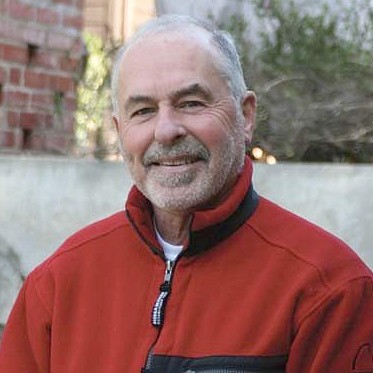
The Lawrence Badash Prize recognizes the outstanding graduate student essay in the history of science, technology, or medicine in any era or geographical arena, or on weapons control. It honors Lawrence Badash, Professor Emeritus of the History of Science.
Interested in contributing to this award? Donate here.
Current and Previous Recipients
2023, William “Billy” Marino, “Seeing Mars: How the First Close-Up Images of Mars Reshaped Knowledge of the Red Planet’s Environment in the 1960s”
2022, Isidro González, “Dysgenic Data: Making Field Workers, Propositi, and Family Histories at the Sonoma State Home, 1910s-1920″; and Nicky Rehnberg, “Racializing Redwoods”
2021, Alexandra Noi, “Gulag Ex-prisoners, Indigenous Peoples, and the Scientific Exploration of Siberian Taiga”
2020, Kandra Polatis, “An Imperfect Burial: Disease, Burial Regulations, and Resistance in Japanese-Occupied Taiwan”
2019, Sean Gilleran, “‘We have your Mechanical Brain’: An Internet History of Malcom X Hall”
2018, Elizabeth Schmidt, “Very Tedious and Pompous Processes: Gendered Medicinal Authority in Eighteenth-Century Britain”
2017, Julie Johnson, “A Woman’s Business: Branding Marie Stopes, 1918-1939.”
2016, Brian Tyrrell, “Bred for the Race: Thoroughbred Breeding and Racial Science, 1900-1940.”
2015, James White, “Ctesias of Cnidus: Physician and Historian.”
2014, Paul Warden, “Ungesund: Yellow Fever and the Collective Medical Geography of German Immigrants to the United States, 1820-1860.”
2013, Henry Maar, “Three Megatons of ‘Peace’: the Revolutionary MX Missile and the Meaning of Survival in the Atomic Age.”
2012, Hanni Jalil Paier, “Sin Salud no es posible cultivar la tierra: Sanitary units and Rural Health Commissions in Colombia, 1934-1938.”
2011, Roger Eardley Pryor, “Better to Cry than Die?: the Paradoxes of Tear Gas in the Vietnam Era and Today.”
2010, Jill Briggs, “Birth Control in Jamaica.”
2009, Nicole Pacino, “Healing the Nation: The Bolivian Revolution, Public Health, and the Process of Nation Formation 1952-1964.”
2008, Jill Briggs, “An Agreed-on Program: Eugenics and Public Discourse in the late 1930s”
2007, Nicole Ann Archambeau, “The Cycle of Negative Emotions: Comparing Sufferers and University Trained Practitioners’ View of Tristitia.”
2006, Paul Hirsch, “Weird Science: Uncensored Representations of the Atomic Bomb in American Comics, 1945-1954.”
2005, Donald Raymond Burnette
2004, Jason Kelly, “The Society of Dilettanti.”